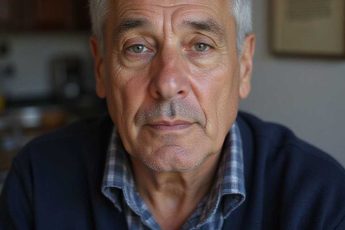
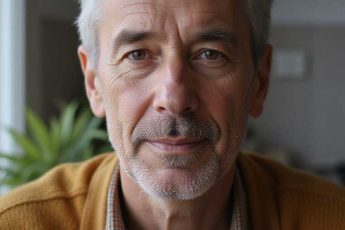
In Via del Castagno, where ancient chestnut trees bowed over cobblestones worn smooth by time, and the air carried whispers of jasmine in the spring, there lived an old woman.
To most, she was a ghosta shadow against the crumbling stucco walls, another soul swallowed by the rush of life. Her home was less a home and more a relic, its shutters clinging to the frames like weary hands. No children visited, no laughter echoed through its halls. Only silence kept her company.
Each afternoon, she perched on the low stone wall outside, her frail body curled inward as if the world had pressed her smaller with each passing year. Her eyes, deep as well water, held stories no one asked to hear.
People passed by. Some sighed with fleeting pity. Others barely glanced. No one stayed.
No one, except me.
I was no one remarkablejust a neighbor tangled in the mundane rhythms of life. But something about her clung to me. Perhaps it was the way her fingers trembled around her rosary, or how her gaze lingered on the church bells as they tolled.
One evening, after supper, I wrapped a portion of pasta al pomodoro in a cloth and crossed the piazza.
She flinched when I offered it, as if kindness were a distant memory.
“Non è necessario,” she murmured, her voice like dry leaves.
“Lo so,” I replied softly. “Ma voglio.”
That night, as I watched her eat with slow, deliberate motions, something inside me shifted.
What began as a simple act became a quiet devotion. Leftovers turned into meals made just for herribollita on chilly evenings, crespelle stuffed with ricotta, panettone shared at Natale.
For four years, I brought her a dish every evening.
She never asked for more. Rarely spoke beyond a whispered “grazie.” Yet in her silence, I heard gratitude. In her frailty, I saw strength.
The neighbors noticed. Some muttered. Others shrugged.
“Per loro, era un peso,” I often thought. “Per me, era una lezione: come trattiamo chi non può darci nulla in cambio.”
My life began to orbit those meals. It wasnt just nourishmentit was dignity.
Yesterday, she left us.
No sirens, no chaos. Just a stillness that settled over Via del Castagno like a held breath. Her spot on the wall sat empty, and for the first time in years, the piazza felt too loud in its silence.
I carried her plate out of habit, then froze mid-step.
She was gone.
Tears blurred the cobblestones as I left the food by her door, knowing shed never open it again.
That night, the world felt hollow. The absence of one quiet soul made the stars seem dimmer.
Later, as I stared at her darkened window, my phone trembled in my hand. An unknown number glowed on the screen.
“Lufficio comunale,” a gentle voice said. “Abbiamo trovato il suo numero tra le sue cose. Lei lha indicata come contatto demergenza. Ha lasciato qualcosa per lei.”
My throat tightened. Contatto demergenza? Io? She had no oneyet shed chosen me.
The next morning, I walked to the municipio with leaden steps. They handed me a small wooden box.
Inside, no gold, no treasuresjust a letter, its ink shaky, the paper thin as a saints prayer.
“Allunica che mi ha visto,
Mi hai nutrito il corpo, ma più ancorami hai ridato lanima. Mi hai fatto sentire umana. Mi hai dato una ragione per aspettare il domani.
Grazie per essere stata la mia famiglia, quando il mondo mi aveva dimenticata.
Con affetto,
Luciana”
I traced her name with trembling fingers. For four years, shed been “la vecchietta di Via del Castagno.” Now, she was Lucianaa woman with a name, a story, a heart that remembered.
That night, I sat on my balcony, facing her empty window.
I thought of how the world chases grandezza in fame and fortune. Yet here was a lifeunseen, uncelebratedthat built a monument not of stone, but of shared bread and quiet glances.
Luciana was gone, but her gratitude remained. Her letter taught me that saving a life doesnt always require stormssometimes, its just showing up, with a plate, with time, with eyes that see.
In the weeks that followed, something stirred.
Neighbors whod once turned away now paused at her wall. Some asked about her. Others admitted theyd been too busy to notice. A few even joined me at the soup kitchen near San Lorenzo.
Her storyour storyspread like incense in the wind. And slowly, kindness began to bloom again.
Not with fanfare. Not with speeches. But with small, stubborn acts of grace.
I keep Lucianas letter framed by my bed. It whispers a truth I once missed: la gentilezza non è mai sprecata.
Even when no one sees, even when the world forgets, compassion plants seeds that outlive us.
The meals I brought fed her body, but her words fed my soul.
On Via del Castagno, she might have been invisible to many, but to me, she became maestra. She taught me that humanity isnt measured by heights climbed, but by hands held.
Sometimes, when I pass her house, I stop by the wall where she sat. The piazza has changed, but her presence lingerslike the scent of rosemary after rain.
And every time I see someone the world ignores, I hear her voice:
“Mi hai ridato lanima.”
Luciana may no longer sit on Via del Castagno, but she left behind something greater than memoryshe left a compass.
That true wealth isnt in palazzi, but in shared panini. Not in crowds cheering, but in one voice saying “grazie.” Not in being remembered by thousands, but in mattering to one.
La storia della vecchietta di Via del Castagno è un promemoria per tutti:
A volte, gli atti damore più straordinari sono i più semplici.
Un piatto di pasta. Un cuore aperto. Una gentilezza che il mondo non vedema che lanima non dimentica.
E questo basta.